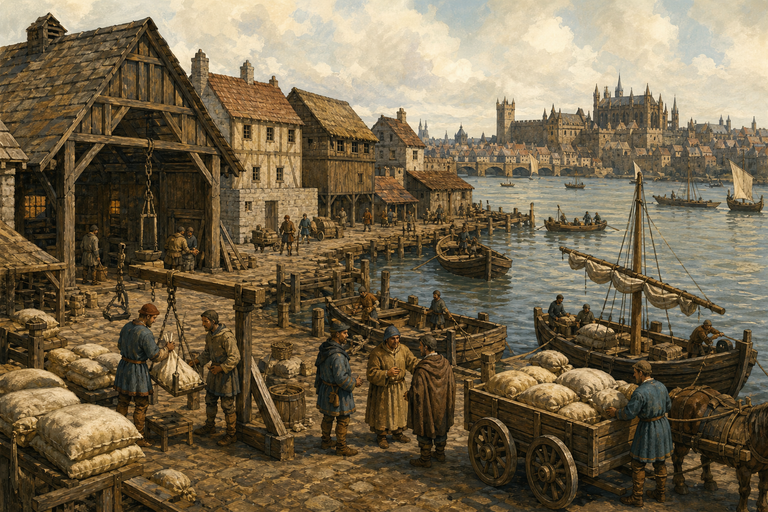
The London Steelyard is one of those names that sounds as if it explains itself.
A yard, a weighing beam, German merchants on the Thames. In reality, the name is later, and the place was not born fully formed. By 1241, the mature Hanseatic compound still lay ahead. What already existed was the pressure that would make such a compound useful: a rich river city beside Westminster, English wool moving toward continental cloth towns, and foreign merchants trying to turn access into rights. The question is not just where the Steelyard stood. It is why London made German merchants need a protected yard in the first place.
Before the Yard
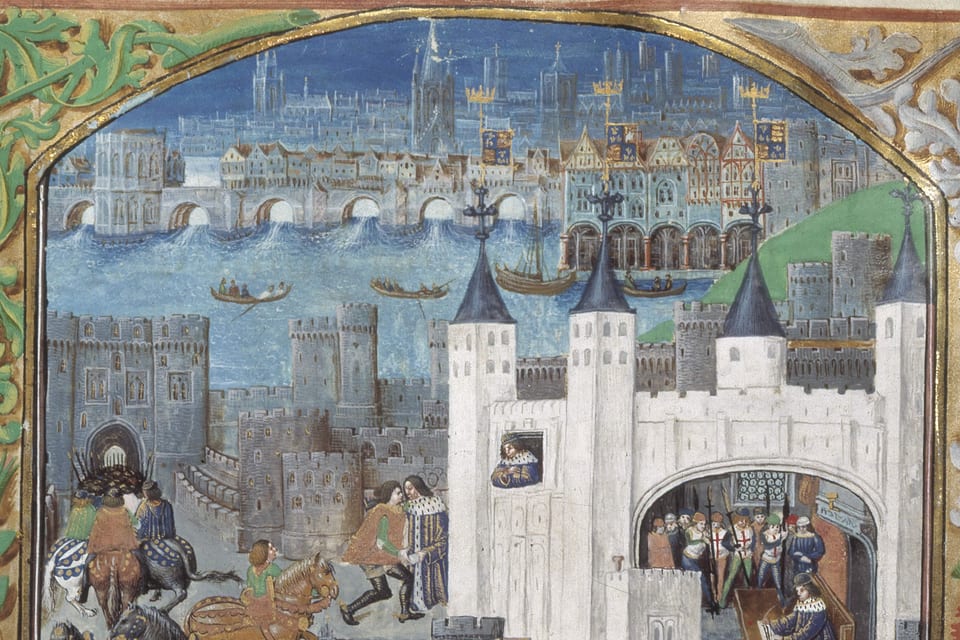
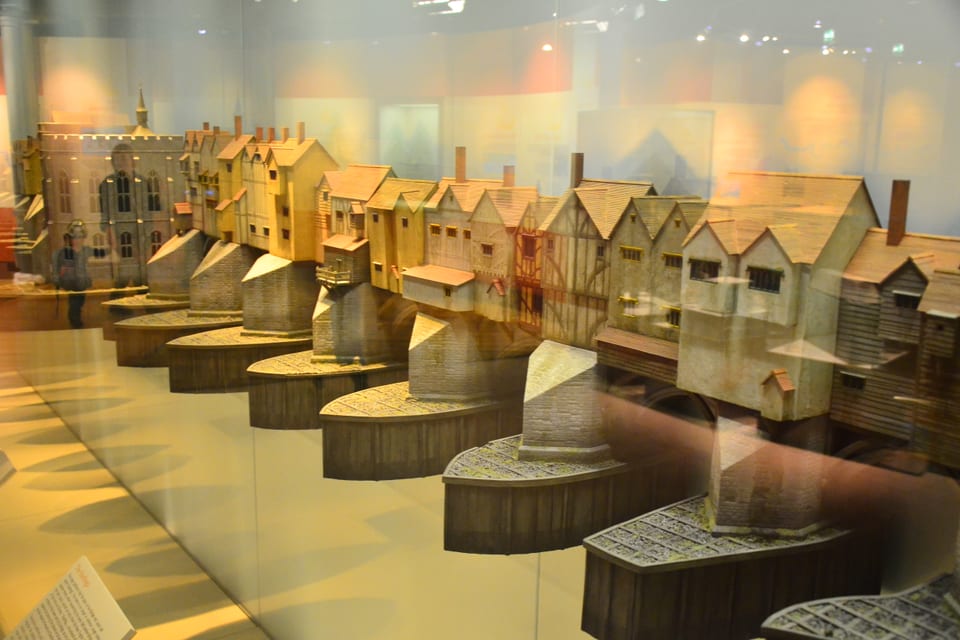
By 1241, London was already a crowded Thames city with Westminster close beside it. Matthew Paris opens the year with Henry III, who “held his court at Christmas, at Westminster, in London.” Royal power was not distant here. It was next door.
Matthew is not a neutral London merchant; he is a monk, a chronicler, and a writer with strong opinions. His London feels tense in useful ways. When new walls around the Tower collapsed, he says Londoners were not sorry: the walls had been a “thorn in their eyes.” Not long after, citizens were “compelled, although unwillingly and reluctantly” to pay tallage to the king. A foreign merchant entering this city entered more than a market. He entered a place where river trade, royal money, civic pride, and legal status pressed against each other.


German London
Arnold Fitz Thedmar gives that pressure a human face. Born in 1201, he became a London alderman and is associated with one of the major civic chronicles of thirteenth-century London. His family story crossed the North Sea: his mother’s line came from Cologne, and his father was connected with Bremen.
The chronicle says Arnold’s Cologne ancestors had heard of London as “so noble and so famous.” They came into England, reached the city, and stayed. Later, by “buying a house in the City of London,” they “were made citizens thereof.” This is German London before the Steelyard as a famous institution: not a walled compound yet, but people buying property, learning law, becoming citizens, and carrying memories of Cologne or Bremen into London streets.
The institutional story comes around them. Cologne merchants had London privileges usually dated to 1157, including rights around wine sales and royal protection for their London house. Traders from Lubeck reached England later, first through other ports such as King’s Lynn, Hull, Yarmouth, and Boston. The joint London office associated with Cologne, Rhenish, Lubeck, and Hamburg interests belongs later still. The tidy name “Steelyard” can hide this earlier mix of families, rights, rival ports, and negotiated access.

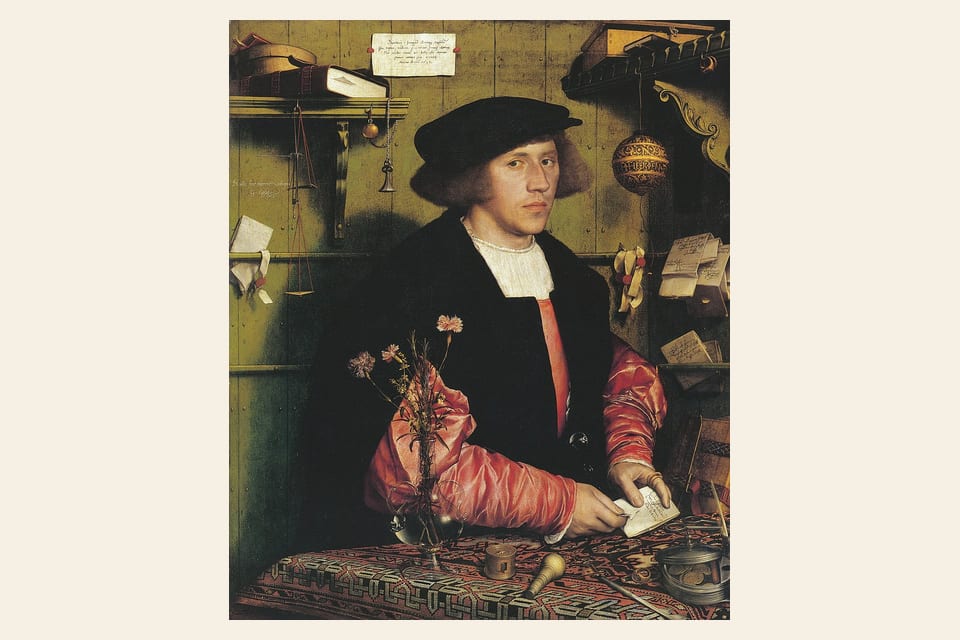

Why London mattered
The magnet was wool. English raw wool is the clearest thirteenth-century anchor: Hanseatic networks reached the wool suppliers of England’s north-eastern and south-eastern counties, while Flemish towns turned wool into cloth and Bruges became the leading western market for wool and cloth. Cologne’s English trade was not only wool-adjacent; Cologne merchants are associated with steel, armaments, fustian cloth, and Cologne yarn. London connected that export and import world to royal customs, city law, ships on the Thames, and buyers with money. Bruges linked northern merchants to salt, wine, Mediterranean goods, Iberian connections, and credit; Cologne tied English trade to the Rhine.
London was not the center of the Hansa world. It was the western gate, valuable because so many systems met there: English wool merchants inland, continental cloth towns across the Channel, royal officers, civic officials, and foreign traders who needed rules they could survive. The later Steelyard made sense because it gave a permanent form to that tangle.
The Merchant’s Problem
For Hansa Trader, London can stand as the western edge of the northern trade world: an English wool and customs node, a market for Baltic goods, and a city where trade runs into law and power. That remains a game abstraction, not a claim that the mature Steelyard was already complete in 1241.
The stronger historical line is rougher and more useful: in 1241, London was not yet the Steelyard city of later Hanseatic memory. It was a city German merchants had to solve. Cargo could get them to the Thames. Staying there meant privileges, property, citizenship, tolls, royal demands, and city politics. The famous yard came later because access to England required more than a good load of goods.
Sources
- Arnold Fitz Thedmar, translated and edited by H. T. Riley, Chronicles of the Mayors and Sheriffs of London, A.D. 1188 to A.D. 1274. The main civic voice behind this article’s London scenes and Arnold’s family background.
- Matthew Paris, translated by J. A. Giles, English History, from 1235 to 1273. Useful for Henry III’s reign, Westminster, London politics, and contemporary perceptions of royal pressure.
- Margrit Schulte Beerbuehl, “Networks of the Hanseatic League,” European History Online. The main synthesis for Cologne’s early London privilege, Lubeck’s later entry into English trade, and the 1281 joint London office.
- Hansisches Urkundenbuch I, Hansischer Geschichtsverein. Useful source-edition trail for Henry II’s Cologne/London privileges, usually dated to 1157.

Hansa Trader
Try your luck in a deep medieval trading game: run routes, build businesses, and grow your trading empire.
Further reading
- London Customs Accounts, Hansischer Geschichtsverein. Later than the 1241 anchor, but important for the documentary world of London trade from about 1280 onward.