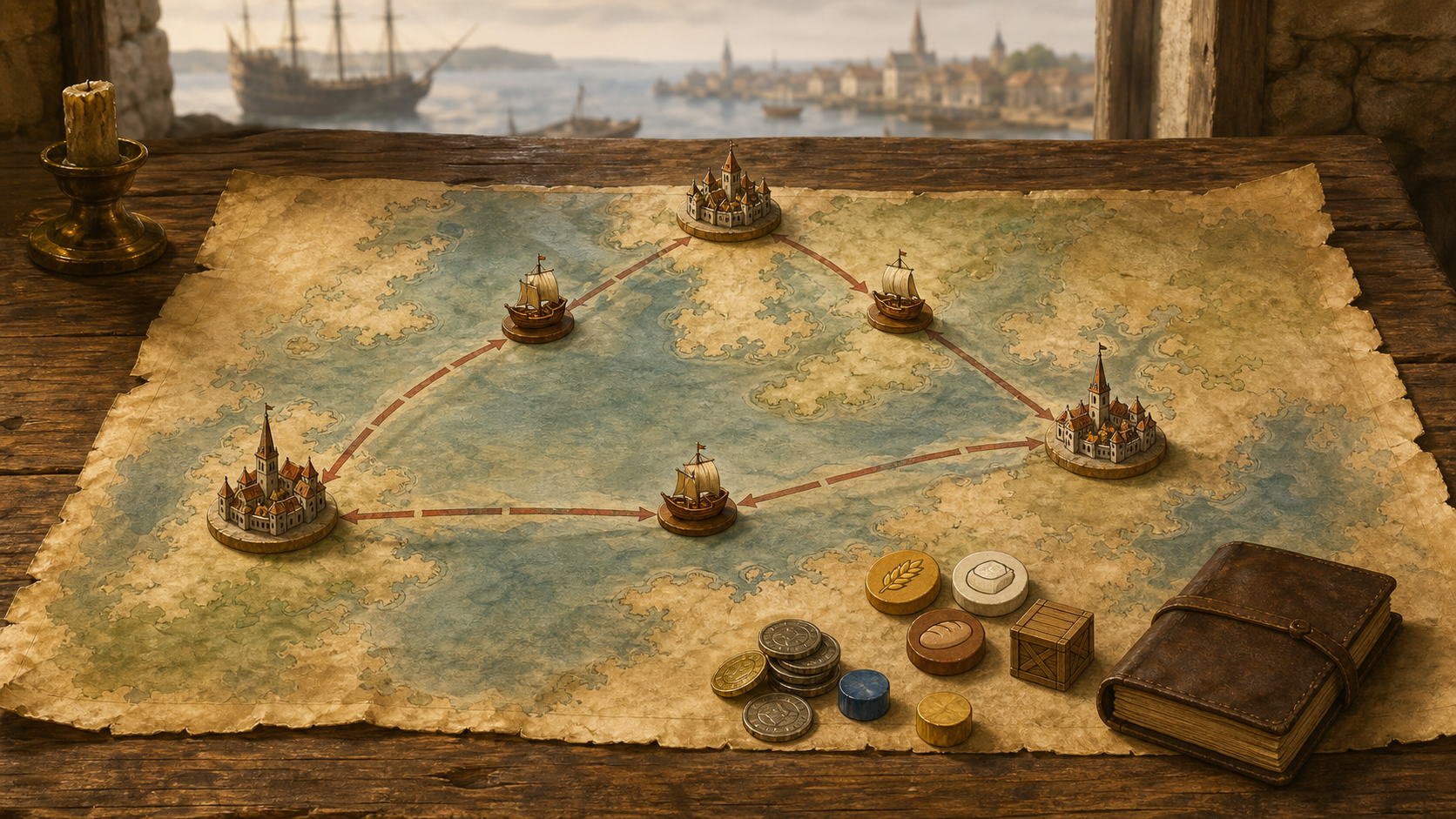
People still search for games like Patrician and Port Royale because they want a kind of strategy game that never fit one clean shelf: not a war game with a market layer, and not a city builder where trade is mostly a supply problem.
That is the useful meaning of the “secret history.” It is not that nobody played these games. It is that the tradition was scattered under different names: multiplayer market game, space trader, German Wirtschaftssimulation, tycoon game, merchant sim, city-builder, RTS without guns.
The fantasy is sharper than “buy low, sell high.” Start small. Read a world better than other people do. Turn a few good decisions into an operation. Cargo is the visible part. The pleasure is building a business inside an economy that pushes back.
Image use note: The header is generated scene-setting art. Commercial-game screenshots in this post are used as fair-use editorial evidence for analysis of specific mechanics. They are not hero art, thumbnails, advertising material, or a decorative gallery.
The Fantasy Is The Business
The weakest version of a trade game is a repeated price gap. Find the cheap port, sell to the expensive port, do it again until the numbers go up. It collapses into a cargo spreadsheet if nothing else changes.
The strong version gives the player a business to shape. A ship becomes a route. A route becomes a fleet. A fleet starts feeding offices, warehouses, factories, city politics, and rivals who notice what you are doing. Prices still matter, but the real question becomes: what do I build around this opportunity before someone else does?
That thread is easier to see in hindsight than it was at the time. The games that carried it often looked unrelated: a colony auction, a starship route, a Hanseatic account book, a train network, a Caribbean convoy, a Martian stock market.
When The Market Became Multiplayer
M.U.L.E. is still the cleanest early proof that markets can create drama between people. Danielle Bunten Berry described games as “a wonderful way to socialize,” and her explanation of M.U.L.E.’s design makes the point sharper: Wheeler Dealers showed her how engaging a real-time auction could be, and M.U.L.E. was built around that interaction.
That matters because the auction is not just an interface for price discovery. It is a room full of incentives. Someone needs food. Someone else has a surplus. A player can hold out, cut a deal, punish a rival, or overpay because the alternative is worse. The market becomes a stage where scarcity and personality meet.
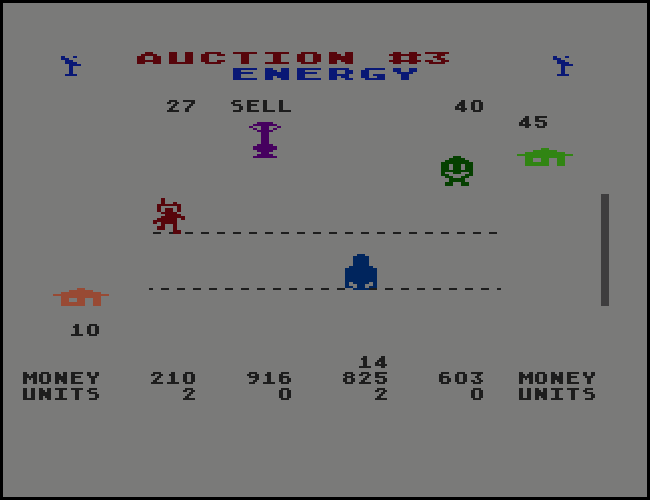
The sales story fits the hidden-lineage point. In Halcyon Days, Berry said M.U.L.E. sold 30,000 copies; its influence traveled less as a mass-market template than as a design idea: trade is most alive when another actor can read the same shortage and make a different move.
From One Ship To A Network
Before Patrician and Port Royale became the obvious reference points, computer games had already found the one-ship trader fantasy.
Star Trader put players in charge of interstellar trading ships moving between star systems, “buying and selling merchandise” as local needs changed. Taipan! moved the fantasy to nineteenth-century China trade. Elite and Trade Wars carried it into broader worlds of danger, upgrades, multiplayer risk, and expansion. This branch often looked like space adventure or online role-play, but the core pleasure was recognizable: one hold, one route, one risky bet.
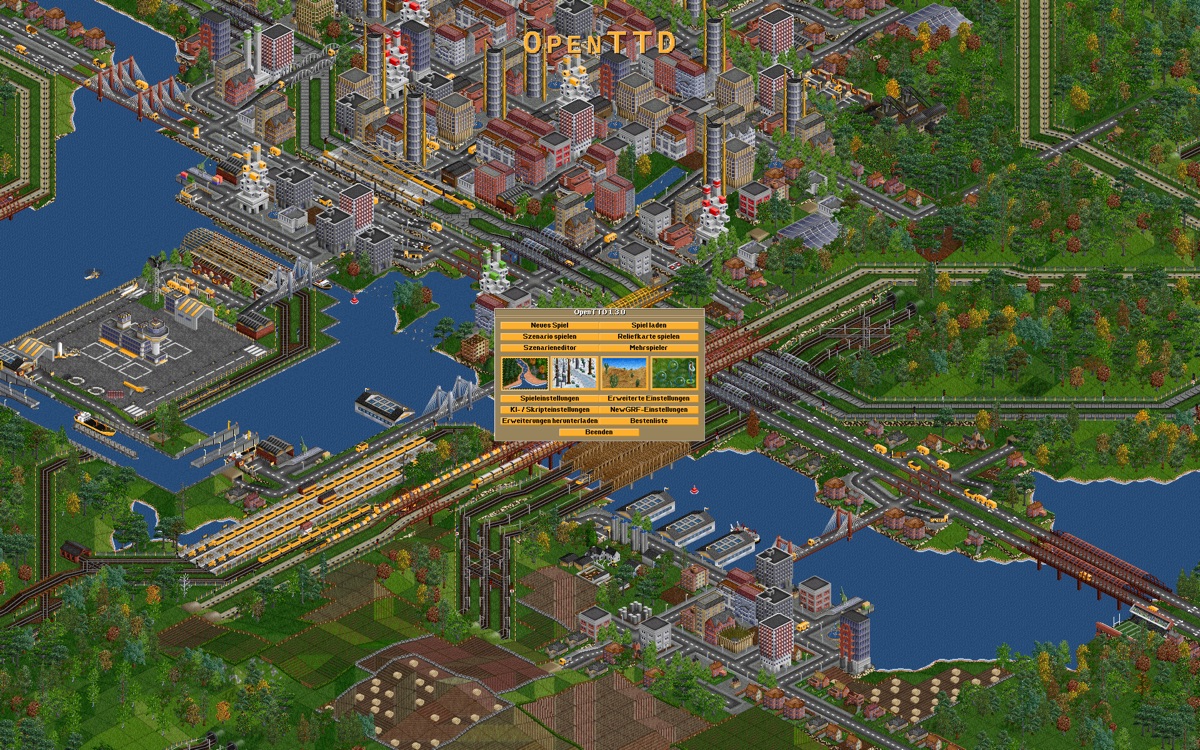
Transport Tycoon answered the next question with systems. Chris Sawyer told Wired that he wanted a game world with vehicles “going about their business,” something fun to watch as well as rewarding to play. Manual decisions create attachment. Automation creates ambition.
The German Trade Empire Branch
The most literal hidden branch sits in German economic simulations. In 1986, Ralf Glau and Bernd Westphal’s Hanse sent players out from Lubeck to build branches, warehouses, ships, and trade with Hanseatic cities. GameStar later treated Glau’s work, including Hanse and Vermeer, as early German business-sim work. That does not make Hanse a direct ancestor of every later game. It does show that Patrician did not arrive in an empty harbor.
Patrician remains the canonical Hanseatic comparison because it made trade a ladder of status. Patrician IV’s own product framing starts with bargaining over common goods, then moves into production, fleets, political influence, town founding, rivals, price wars, sabotage, and piracy. That is a promise that commercial success will change the player’s place in the world.
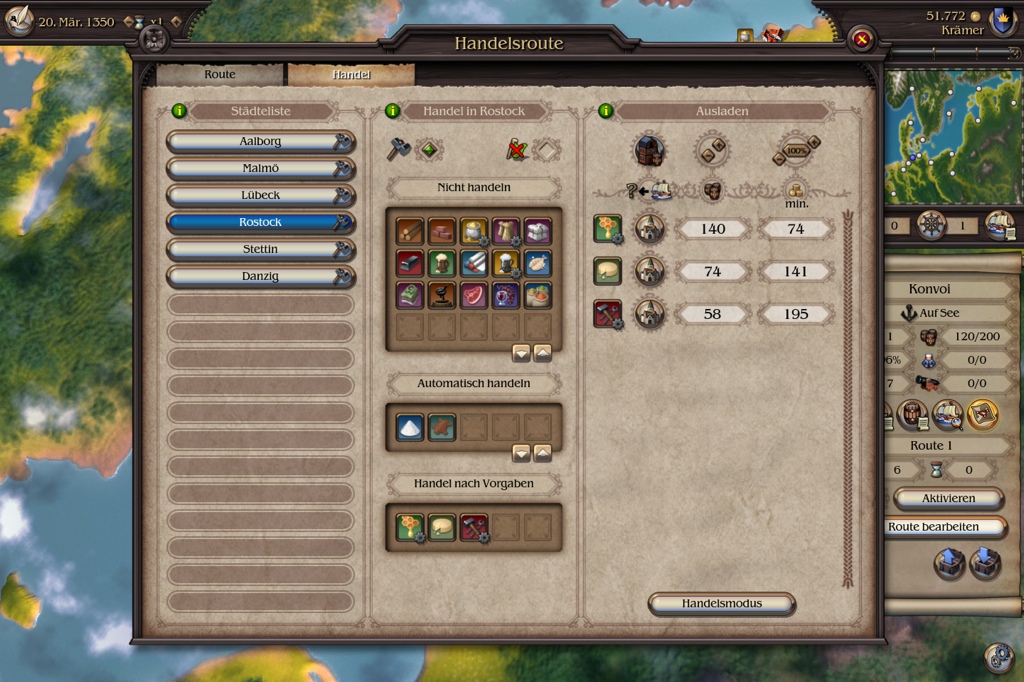
Port Royale shifts the setting to the Caribbean, but the family resemblance is obvious. Its fourth entry points to production chains, complex trade routes, dozens of cities, buildings, reputation unlocks, weather, pirates, and naval pressure.
The Guild and Anno belong nearby, but for different reasons. The Guild pushed business ownership into household, profession, and city status. Anno carried production chains and economic growth into city-builder scale. The point is narrower than niche status: the fantasy was fragmented. Sometimes it became a cult auction game. Sometimes it surfaced under another genre label.
That fragmentation explains the recurring friction. A shallow economy can flatten into routine arbitrage. A deep one can become too much work to read. The genre works when the player is building an operation, not serving one.
Markets Can Be A Battlefield
Offworld Trading Company gives the modern payoff in unusually direct form. The GDC Vault overview describes it as a real-time strategy game “focused on economics instead of combat.” The official site makes the same point through product language: the real-time player-driven market is the player’s weapon and shield.
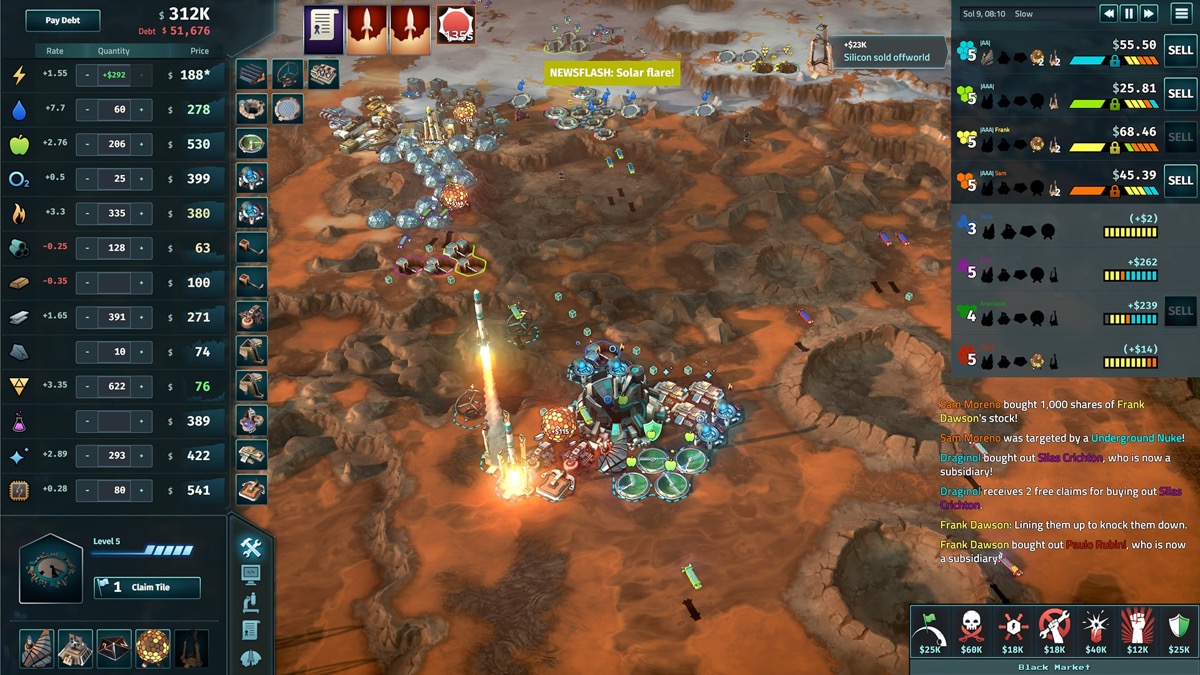
That is the endpoint this scattered history keeps circling. Competition does not need soldiers on a map. It can mean cornering supply, timing a production switch, buying before a shortage, starving a rival’s inputs, or deciding that the best move is to stop trading and build.
What Hansa Trader Takes From This
Hansa Trader is not trying to clone one classic. The useful inheritance is the business-building fantasy that kept resurfacing under different labels.
From Patrician, Port Royale, and Hanse, it takes the appeal of routes, fleets, cities, goods, and a merchant world with memory. From The Guild and Anno, it takes the value of production as business structure, not just a recipe list. From M.U.L.E. and Offworld, it takes the idea that markets sharpen when other actors make pressure visible.
That is why trading strategy games still matter. They offer a power fantasy strategy games often underuse: not command, but judgment. You win because you understood the world a little earlier, built the right operation around that understanding, and lived with the consequences when the market moved.
Hansa Trader
Try your luck in a deep medieval trading game: run routes, build businesses, and grow your trading empire.
Sources
- James Hague, Halcyon Days, Danielle Berry interview. Used for M.U.L.E., Wheeler Dealers, real-time auctions, playtesting, and Bunten Berry’s multiplayer design philosophy.
- TradeWars Museum, Star Trader source-code page. Used for the early one-ship trading-game example.
- TradeWars Museum, TradeWars history timeline. Used for the Star Trader to Trade Wars lineage.
- Taipan! official site and about page. Used for Taipan! setting and background.
- GameStar, “Aufbauvorarbeiter Ralf Glau - Pionierarbeit mit Frischhaltefolie”. Used for Ralf Glau, Hanse, Vermeer, and the German trade/economic-simulation branch.
- Hanse reference page. Used only for basic release, developer, platform, and gameplay reference details around Hanse.
- Gaming Minds, Patrician IV. Used for the official Patrician IV framing around goods, production, fleets, influence, rivals, price wars, sabotage, and piracy.
- Gaming Minds, Port Royale 4. Used for the official Port Royale 4 framing around production chains, trade routes, cities, buildings, reputation, and naval pressure.
- Wired, “Enigmatic developer Chris Sawyer on remaking Transport Tycoon for mobile devices”. Used for Transport Tycoon and Sawyer’s logistics-world framing.
- OpenTTD screenshot gallery and OpenTTD content-creator guidelines. Used for the OpenTTD/OpenGFX logistics-network image and license context.
- GDC Vault, “‘Offworld Trading Company’: An RTS Without Guns”. Used for the economics-instead-of-combat framing.
- Offworld Trading Company official site and media page. Used for the market-as-conflict product framing and official screenshot provenance.
- Puzzud, M.U.L.E. Online. Used for the licensed-remake auction screenshot provenance.